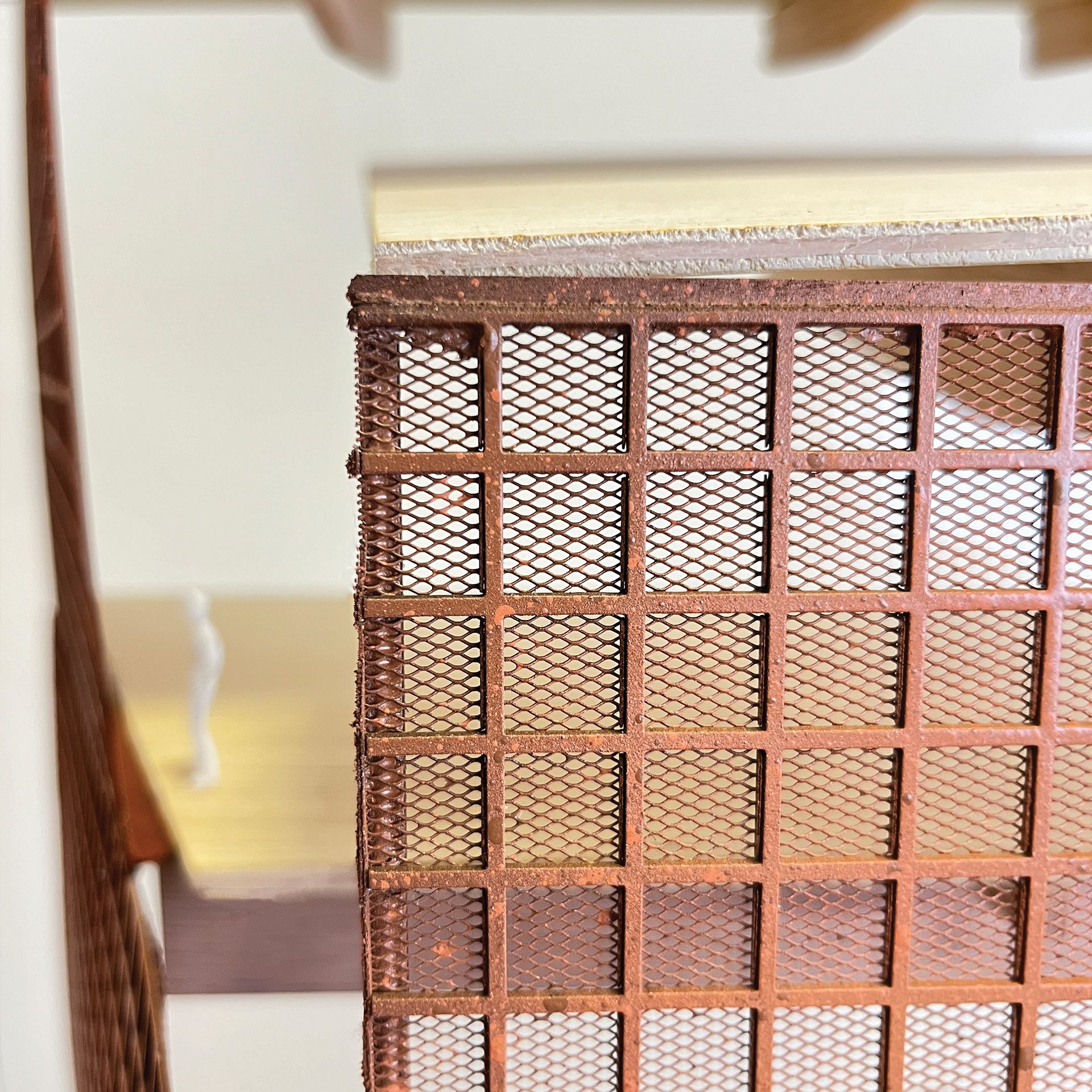
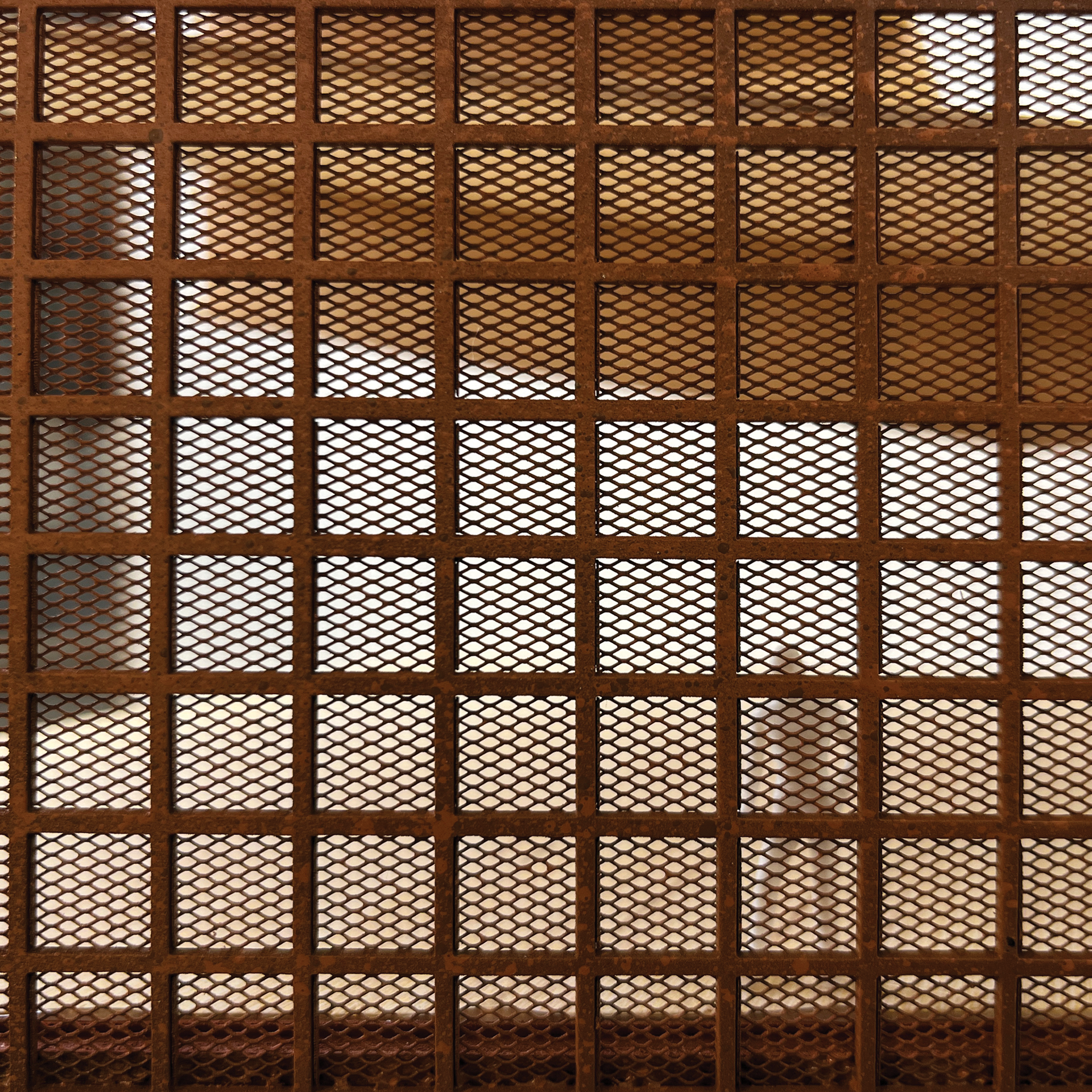
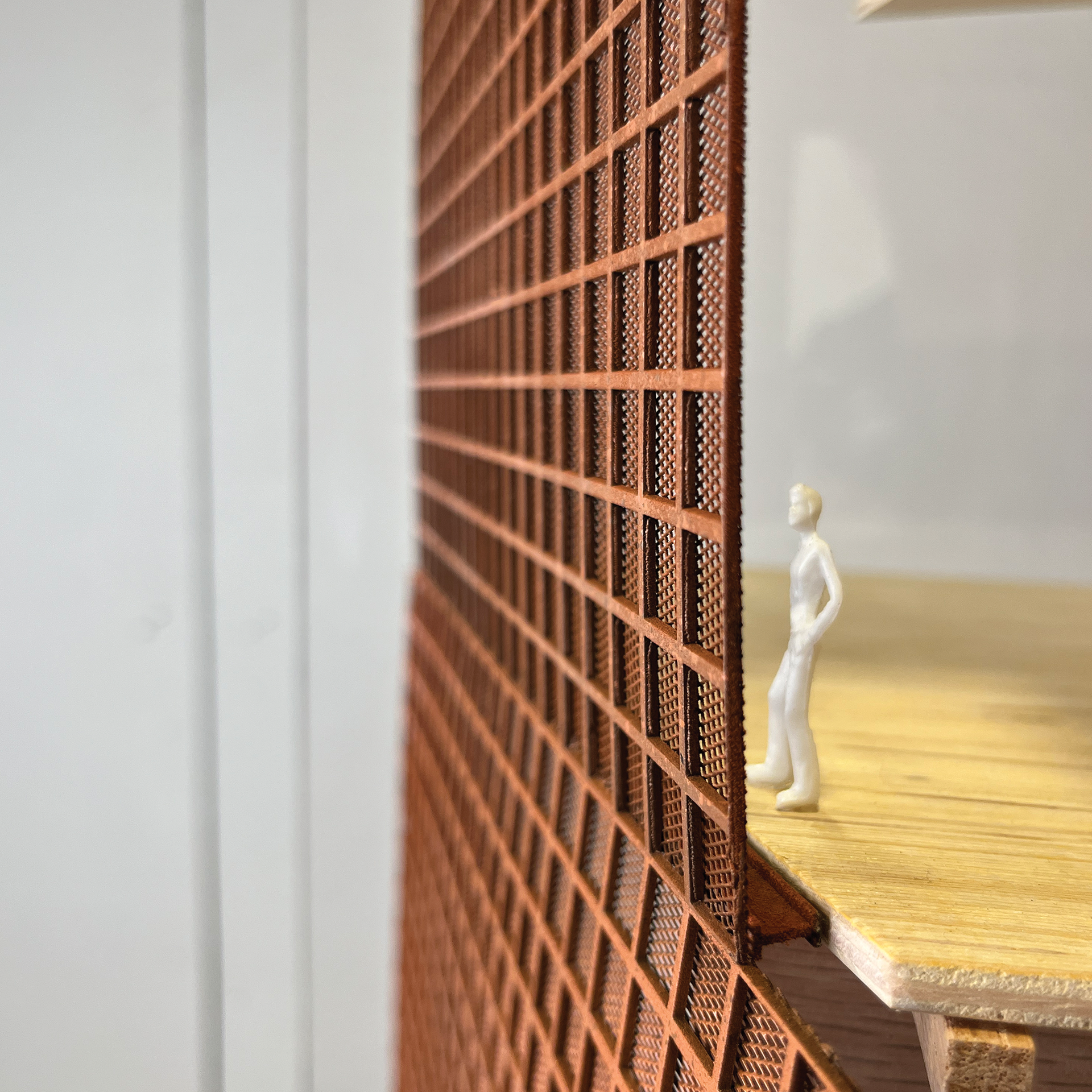
The distillery is both a production facility and a living ecology. A custom façade system integrates hydroponic flower panels and bee hive modules, providing year-round forage and nesting for bees.
In a landscape dominated by heavy industry, the building becomes a source of renewal, supporting pollinators while producing honey that feeds directly into mead and honey-jack distillation. A rooftop crane system, adapted from skyscraper maintenance rigs, enables harvesting: platforms can be lowered along the façade to access honey, wax, and plant growth without disrupting the bees.
Architecture Studio 7 at Woodbury University (2023), Prof. SCRAP MARSHALL

Diagrams and explanation of design and vignettes of key moments

Elevation showing Bee panels (for hives) and Hydroponics (for food)

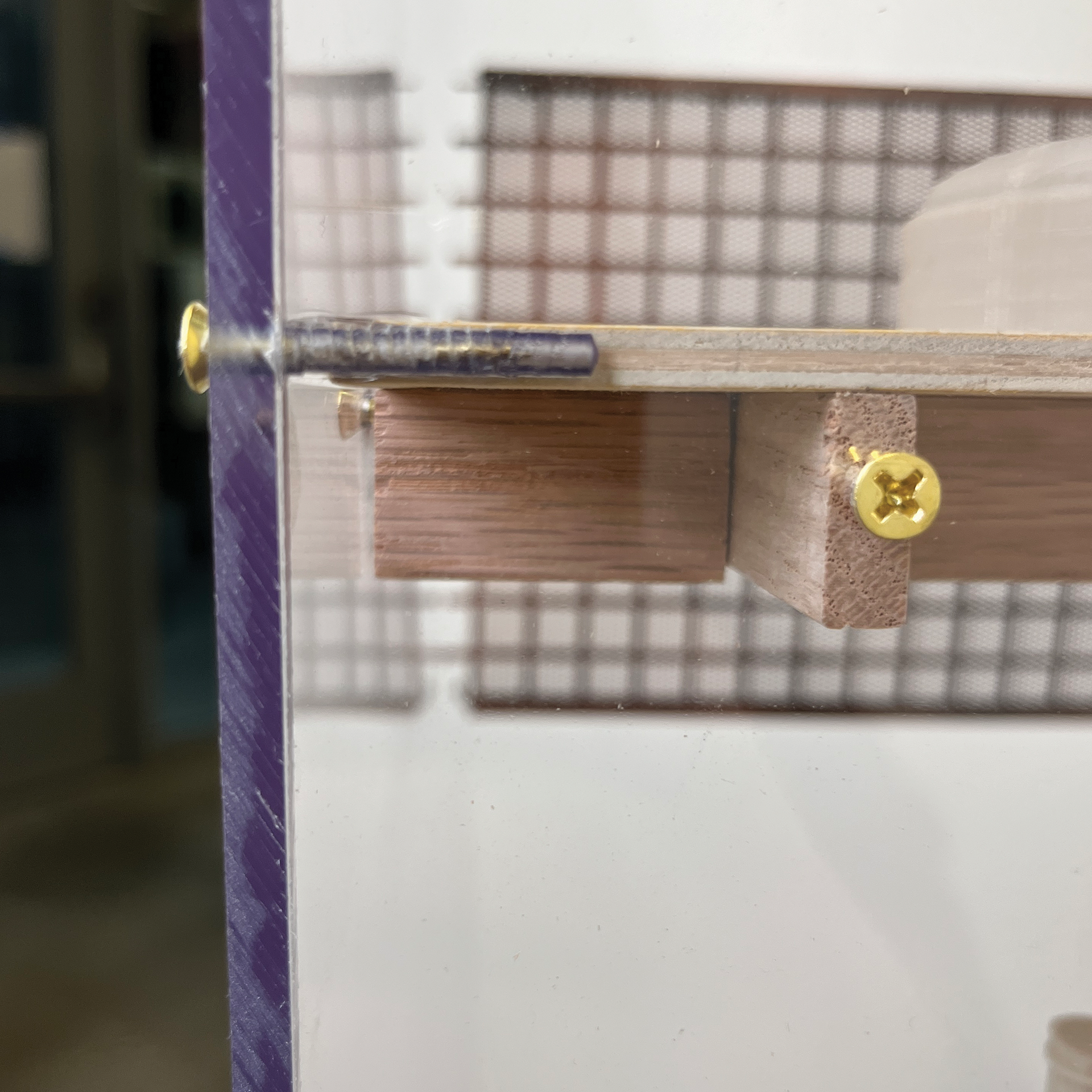
Wall section with details

Mixing level

Fermentation room with guests in the background

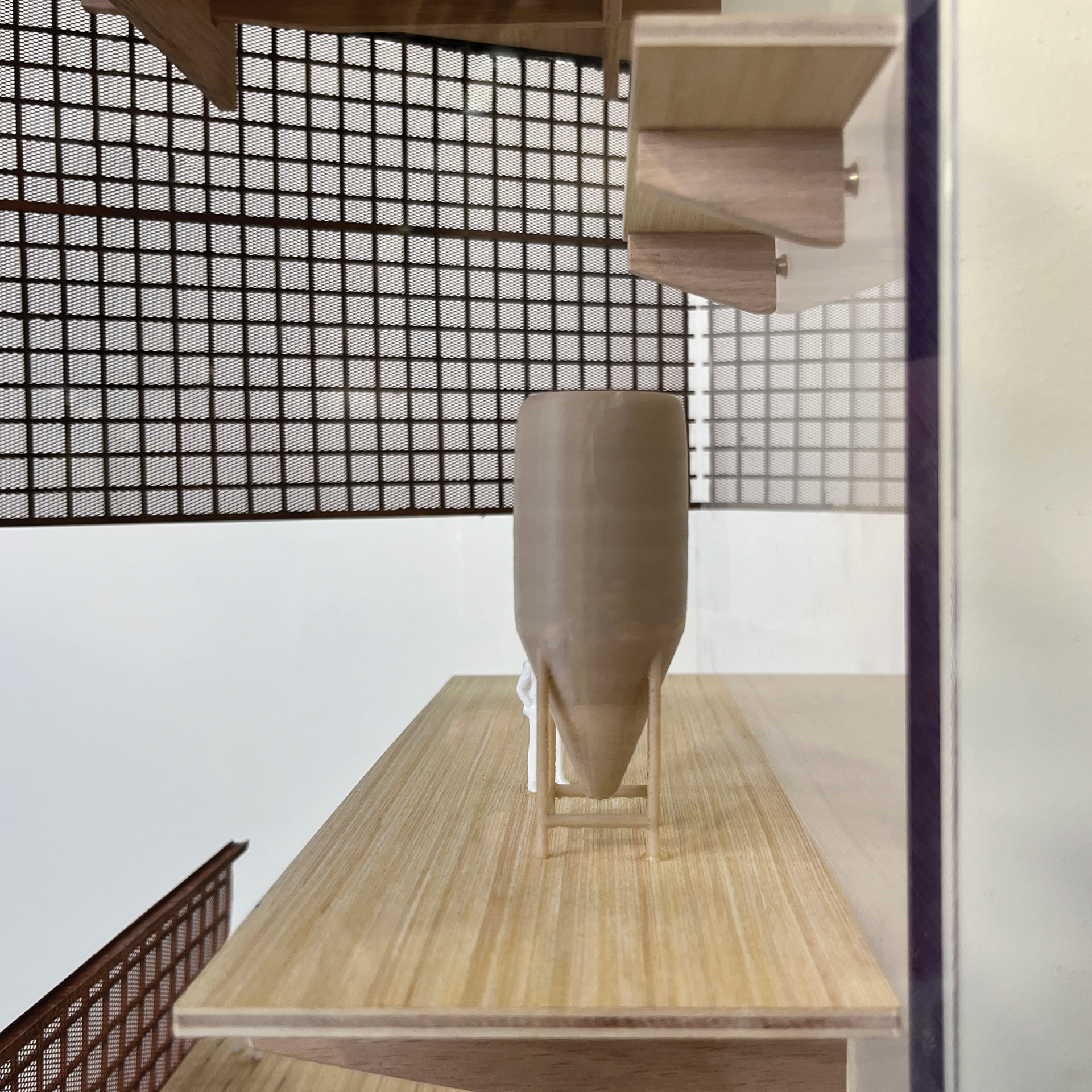
Fermentation tanks reach through the floors to mixing rooms below

Distillation room with hydroponics outside

Restaurant with views of Vernon and LA

Bar and boutique

Thesis topics involved in design

Material render of fermentation room

A monk harvesting honey from the facade

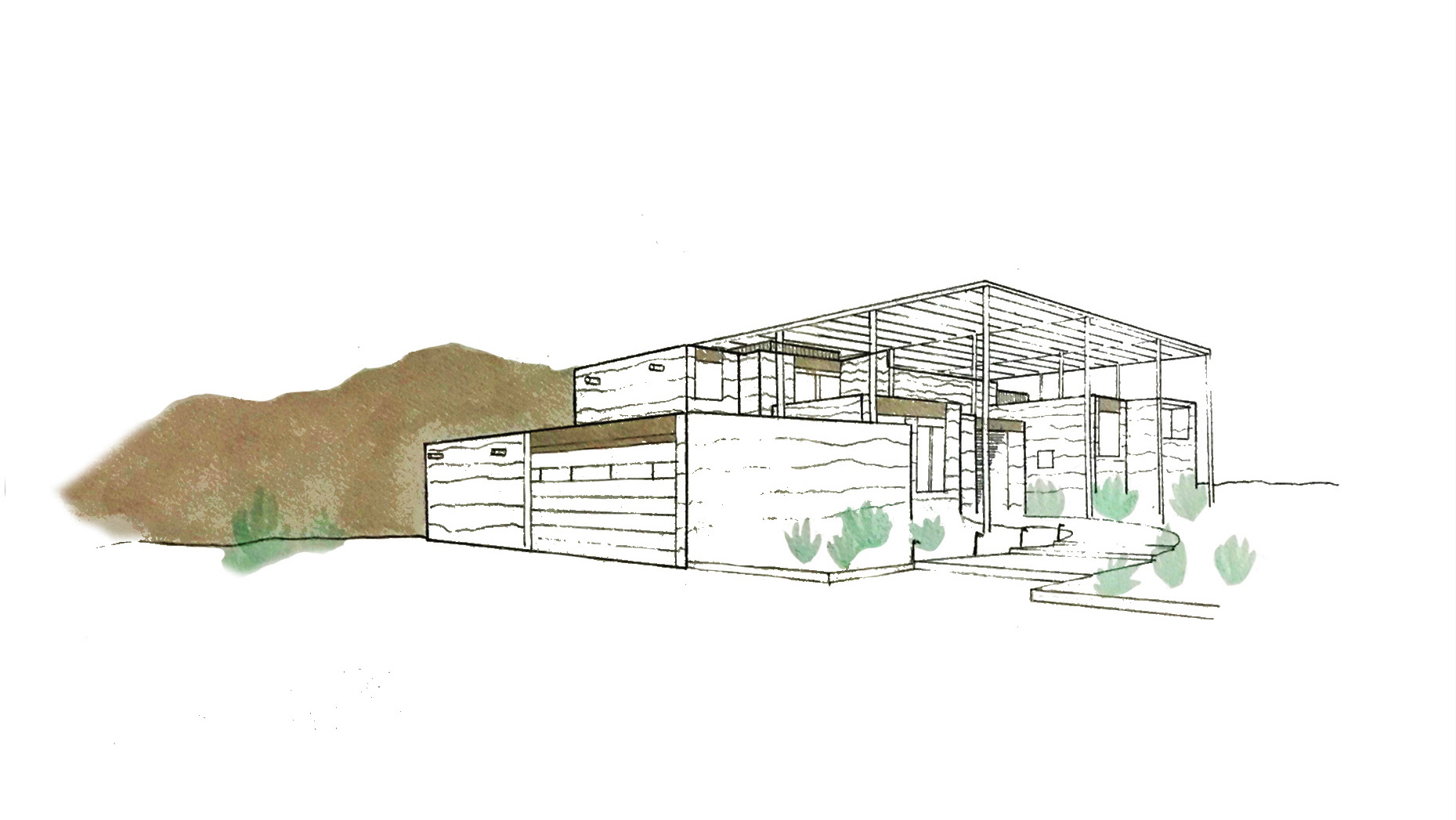
A vision for my design in the 1500s

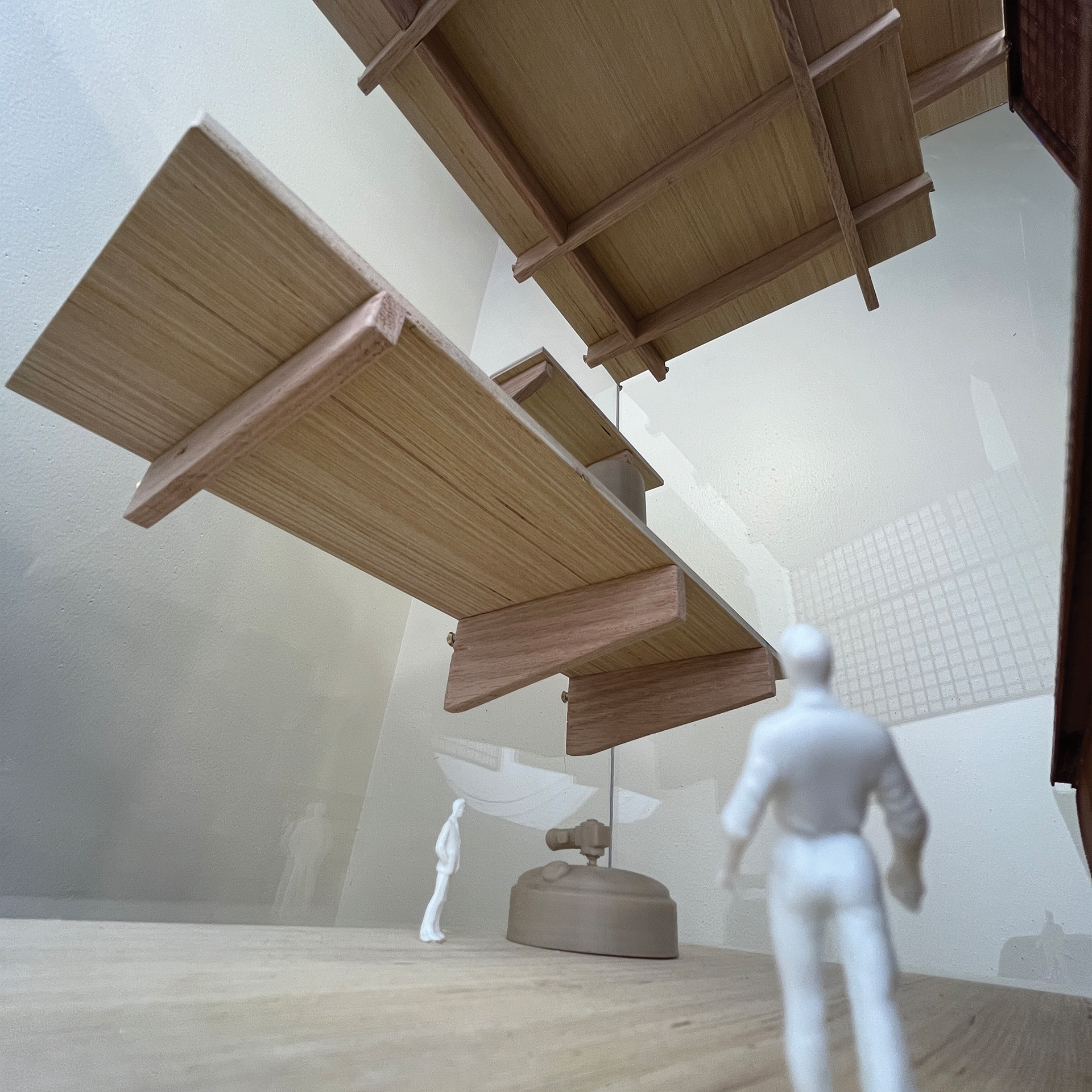
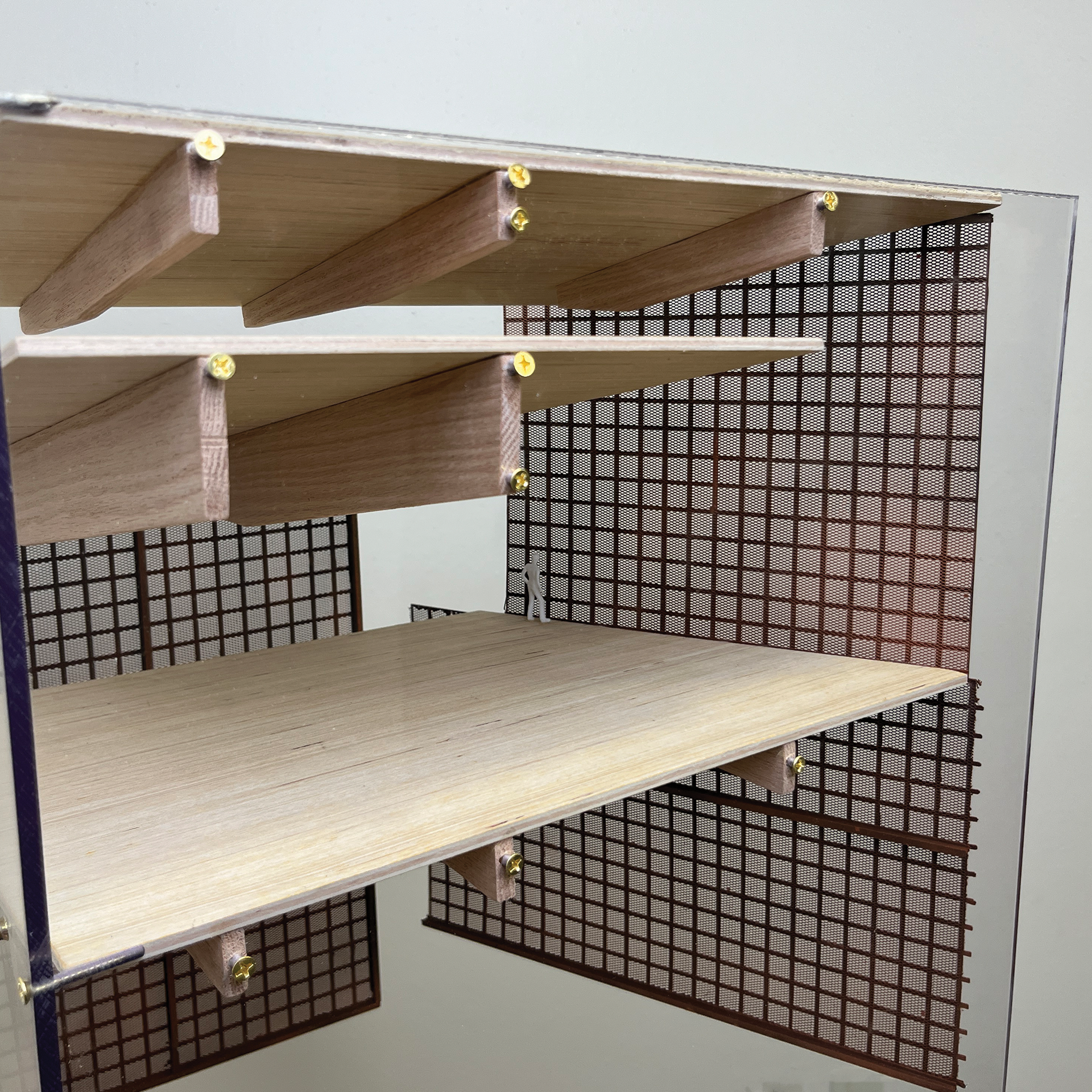
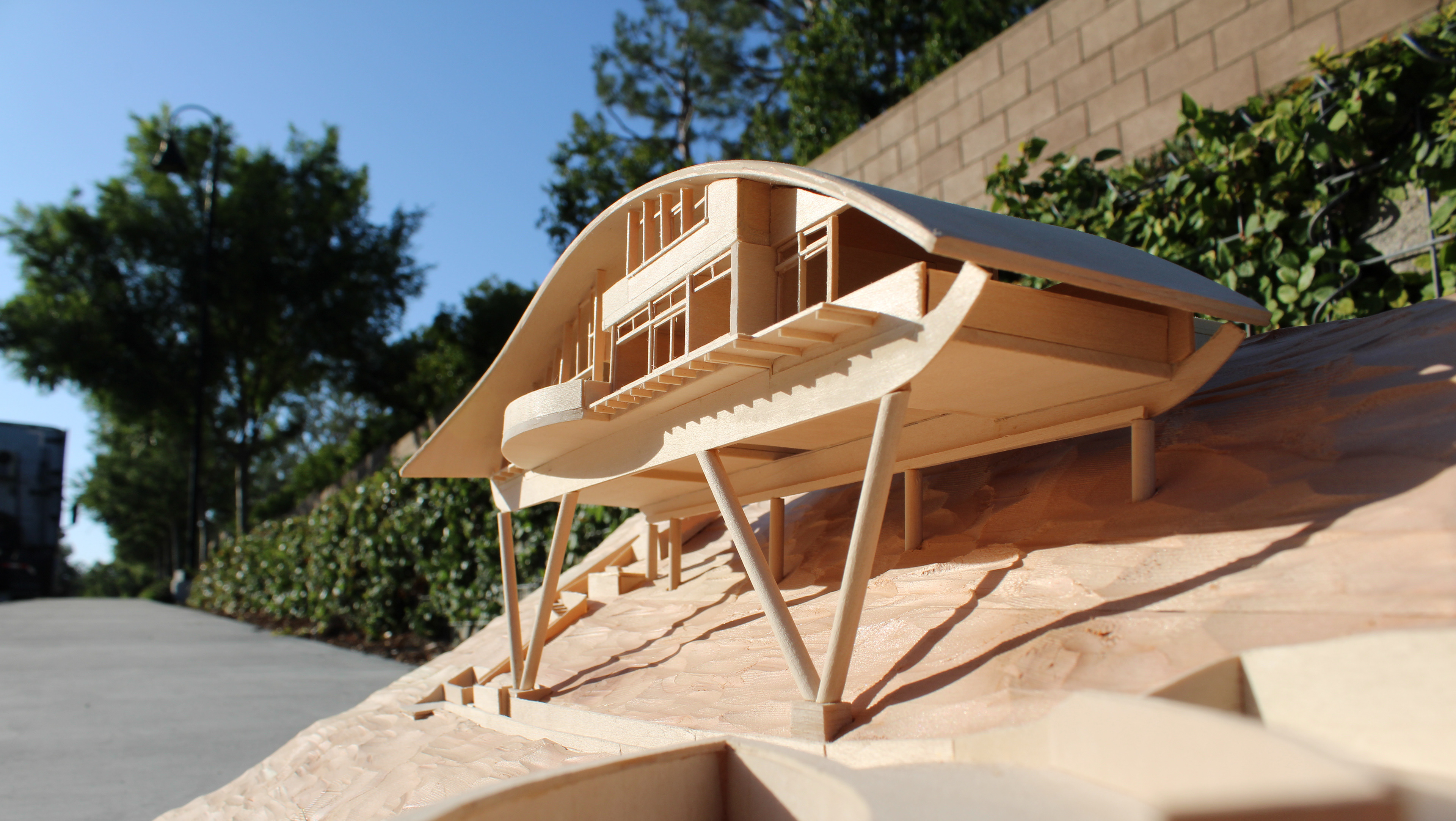
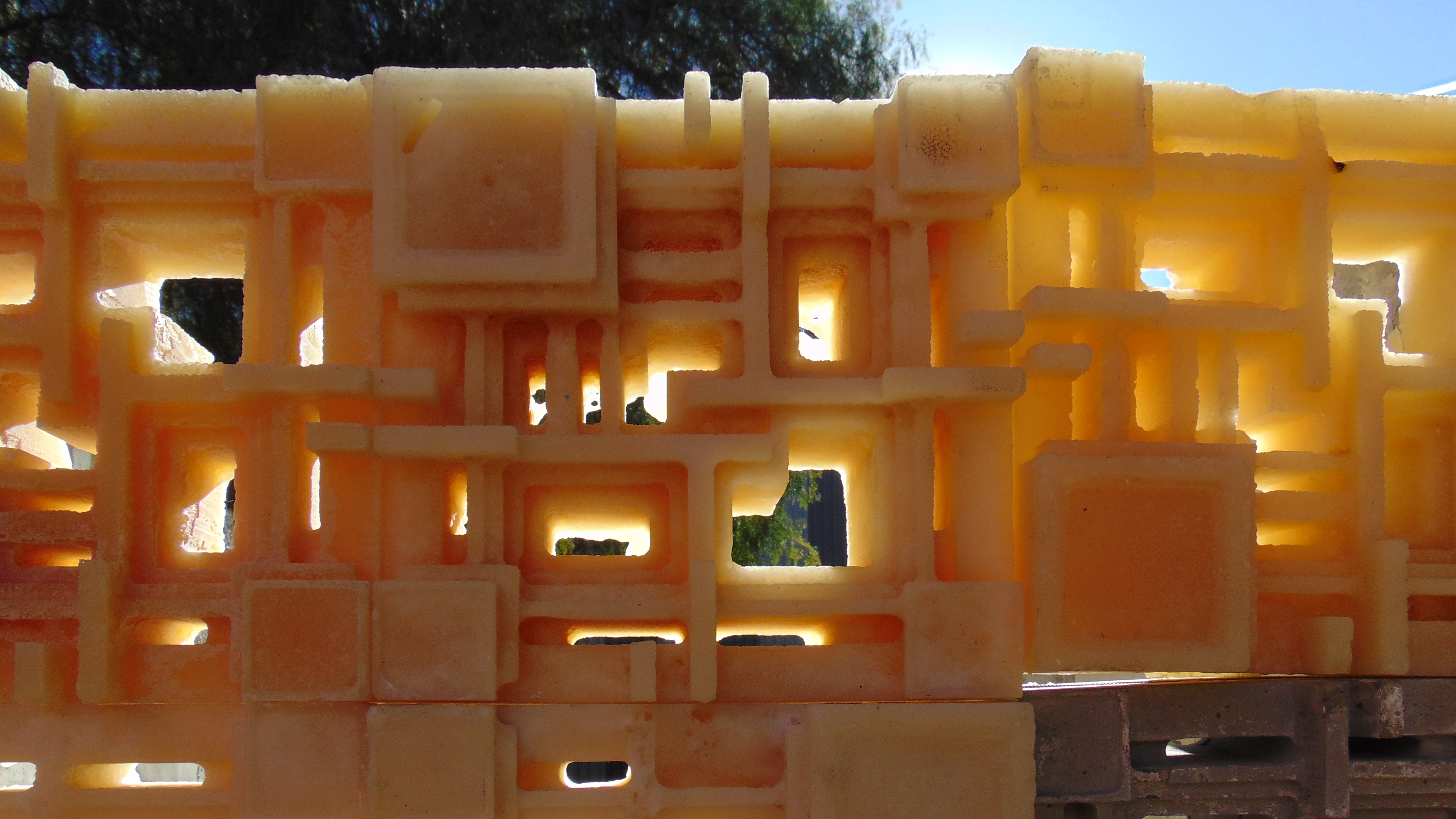
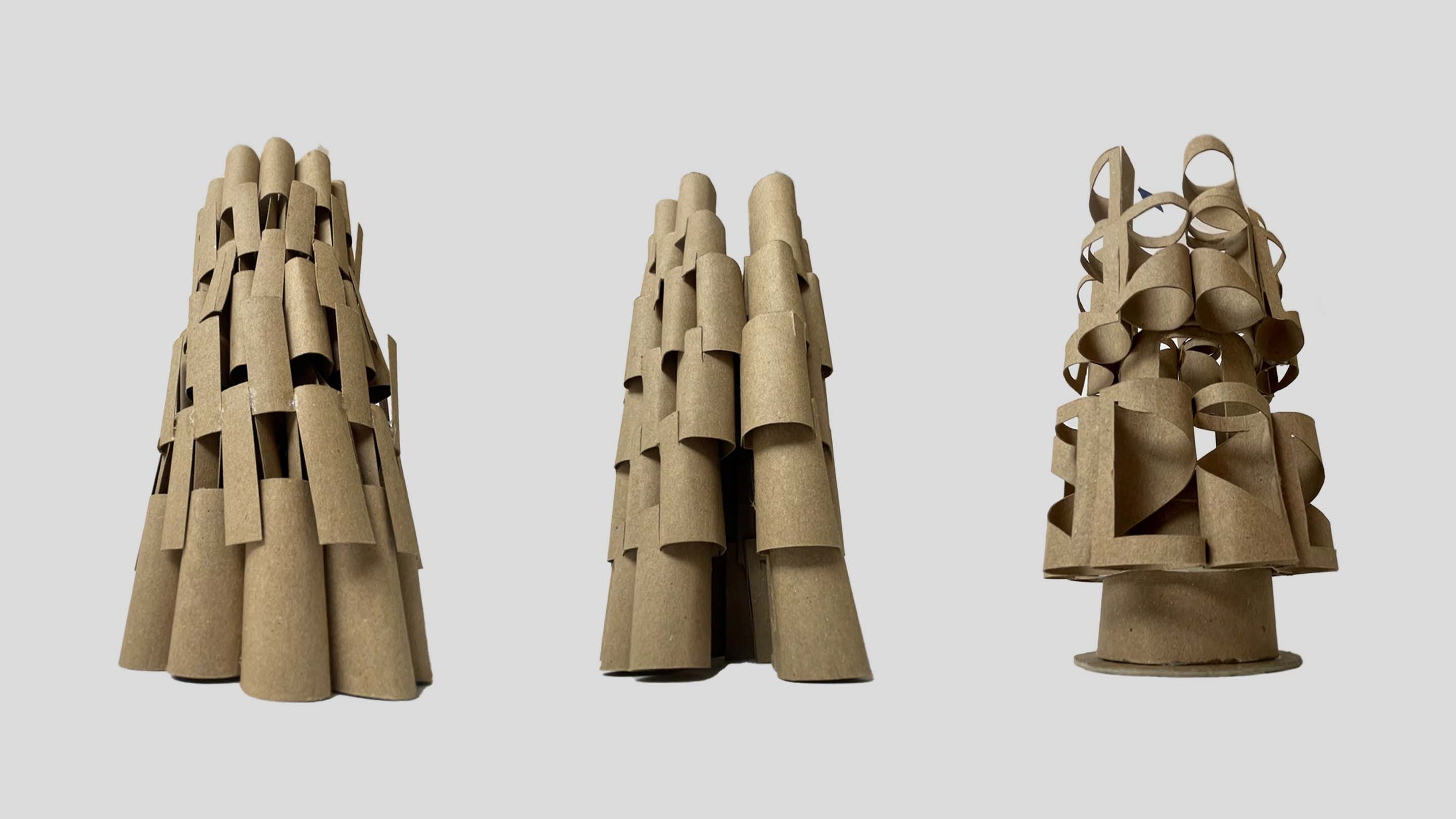
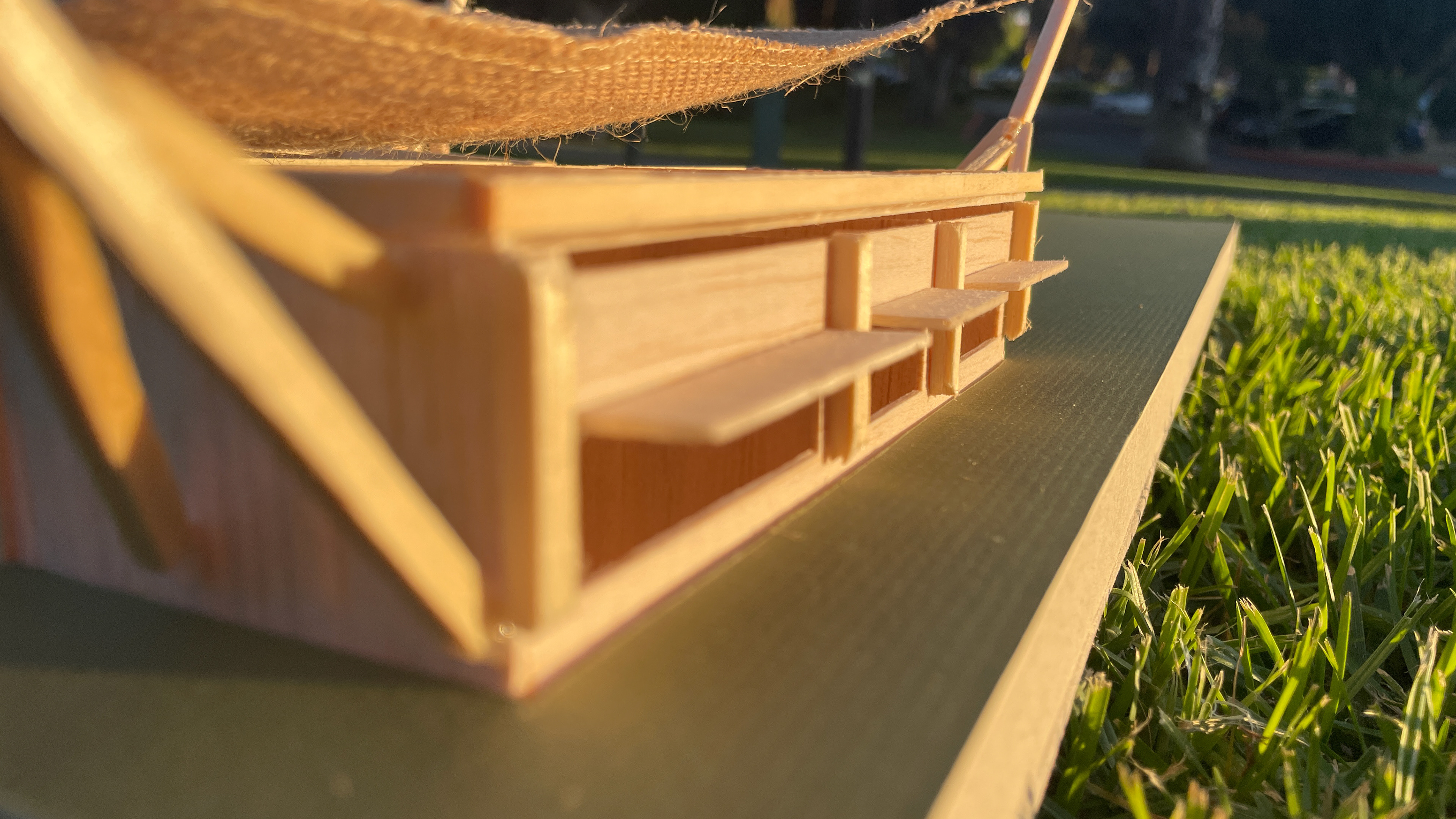
Midterm model


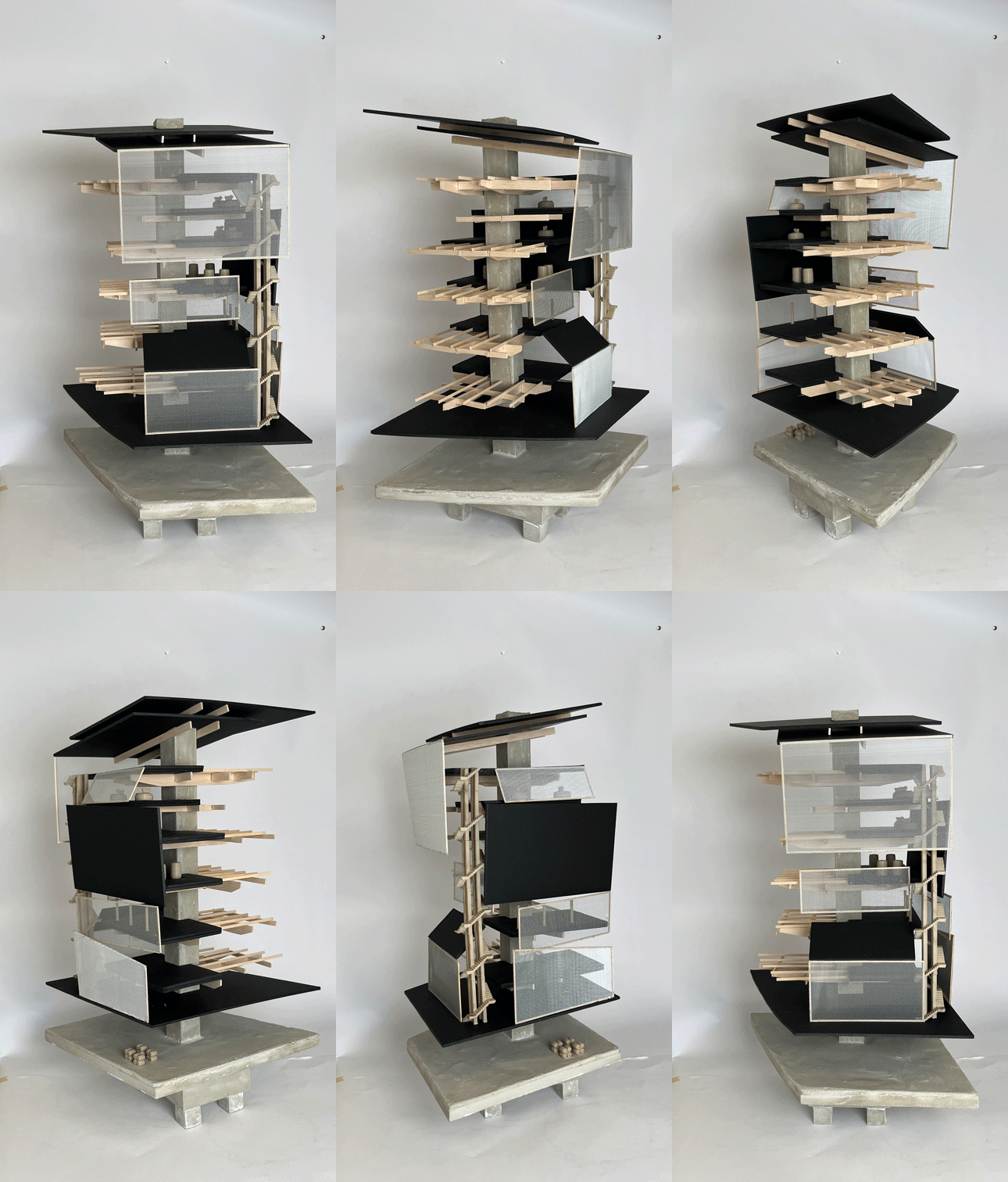
Final chunk model